After more than 50 years since the last Apollo mission, humanity is returning to the Moon—this time to stay. The lunar surface will become our first off-world home, a stepping stone to Mars, and a testament to human ingenuity.
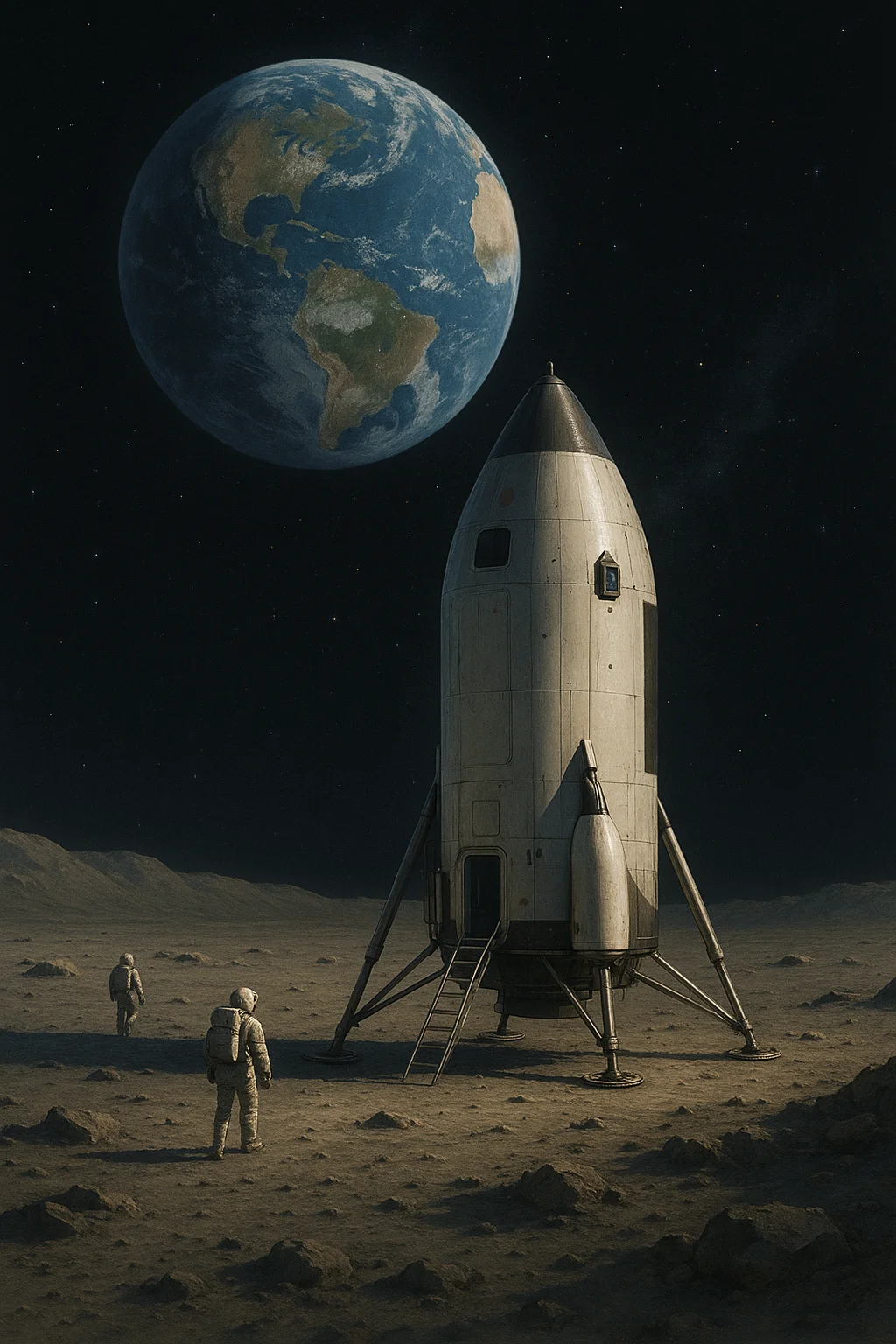
The Artemis Program
NASA's Artemis program represents the most ambitious lunar exploration initiative since Apollo. Unlike the brief visits of the past, Artemis aims to establish a sustainable human presence on the Moon by the end of this decade.
The program consists of multiple phases:
- Artemis I: Successfully completed uncrewed test flight of the Orion spacecraft
- Artemis II: Crewed lunar flyby mission planned for 2025
- Artemis III: First crewed lunar landing since 1972, targeting the lunar south pole
- Artemis Base Camp: Permanent lunar habitat supporting crews for months at a time
The programme's published rationale, repeated across NASA briefings and partner-agency statements, is that sustained lunar presence is the precondition for sending crews to Mars. The physics of the journey is brutally unforgiving; the Moon is where humans get to learn, within three days of home, how to live on a world that is actively trying not to accommodate them.
Why the Moon Matters
The Moon offers unique advantages as humanity's first extraterrestrial outpost:
Scientific Discovery
The lunar surface preserves billions of years of solar system history. Its far side offers an unprecedented radio-quiet zone for deep space astronomy, while lunar geology can teach us about planetary formation.
Resource Utilization
Water ice deposits at the lunar poles can be converted into drinking water, oxygen for breathing, and hydrogen fuel for rockets. The Moon's low gravity makes it an ideal refueling station for deep space missions.
Technology Testing
Before attempting the months-long journey to Mars, we must perfect life support systems, habitat construction, and in-situ resource utilization. The Moon, just three days away, provides the perfect testing ground.
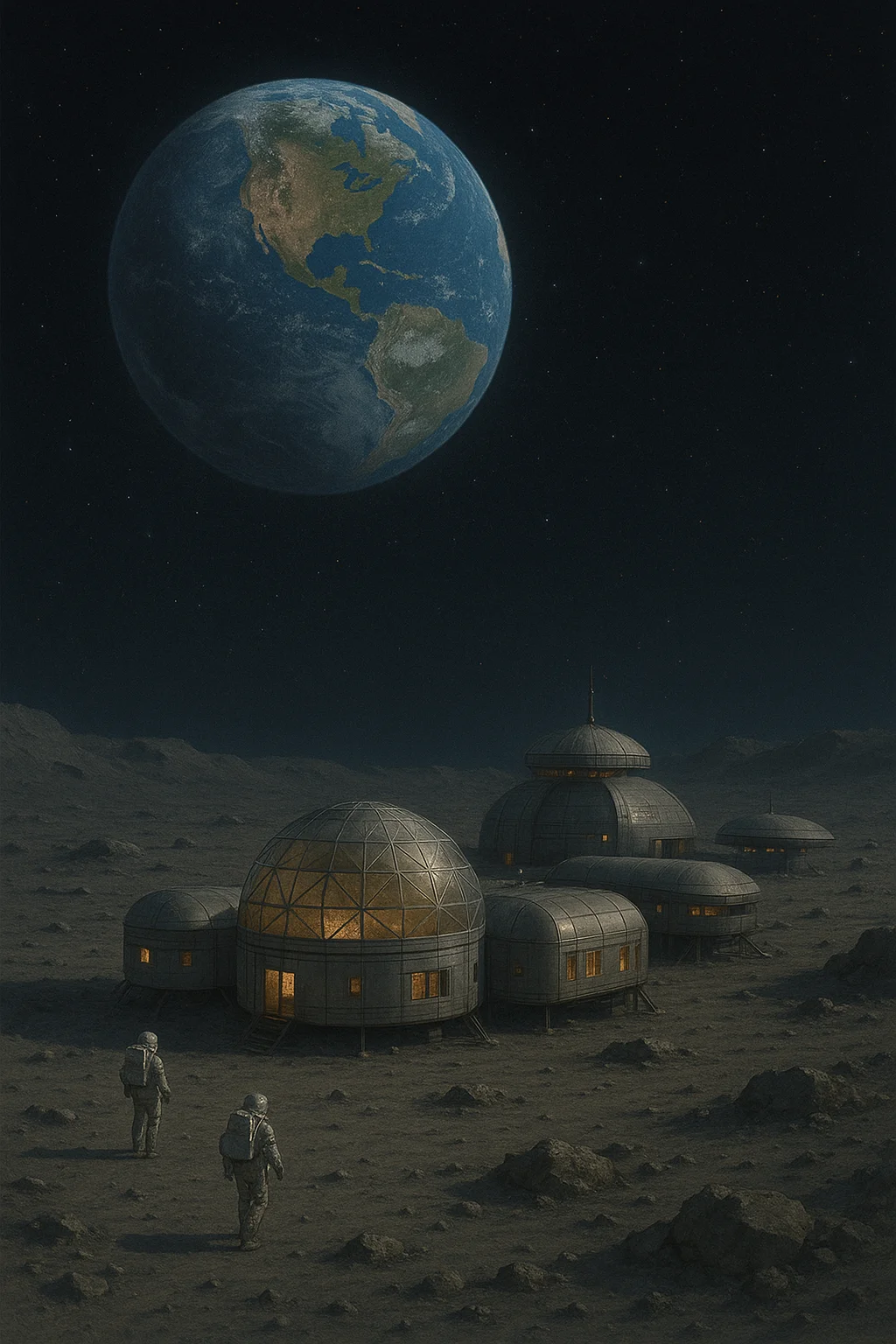
International Collaboration
The return to the Moon is a global effort. The Artemis Accords, signed by over 30 nations, establish principles for peaceful lunar exploration. Meanwhile, China's Chang'e program and Russia's Luna missions demonstrate the Moon's continued importance to spacefaring nations.
Commercial Lunar Economy
Private companies are playing an unprecedented role in lunar exploration:
- SpaceX: Developing the Human Landing System variant of Starship
- Blue Origin: Building the Blue Moon lander for cargo and crew
- Astrobotic & Intuitive Machines: Delivering NASA payloads to the lunar surface
- ispace & Others: Planning commercial lunar resource extraction
The Future is Lunar
By 2040, the Moon could host multiple international research stations, commercial mining operations, and even tourist facilities. What began as a race between superpowers has evolved into humanity's first true off-world civilization.
The lessons learned and technologies developed on the Moon will enable our species to venture further into the solar system. Our lunar neighbour is not just a destination — it is a gateway to the stars.
The South Pole, Specifically
Artemis is not going back to the equatorial regions that hosted every Apollo surface mission. The chosen target is the lunar south pole, a region that combines three features not available anywhere else on the Moon.
The first is permanent ice. Polar craters, particularly those whose rims block sunlight for all time, are cold enough to have trapped water ice that has sat in place for billions of years. Remote sensing by the Lunar Reconnaissance Orbiter, Chandrayaan, and other missions has mapped this ice at scales useful for picking landing sites. Ice means drinking water, breathing oxygen, and rocket propellant without launching any of that mass from Earth.
The second is "peaks of eternal light." Small areas near the pole receive sunlight for most of the lunar year, with only short interruptions. A solar power station placed on one of these high points can run year-round on panels alone, without the enormous battery mass needed to survive a two-week equatorial night.
The third is line-of-sight to nearby craters. A base on a sunlit ridge can look down into a permanently shadowed crater a few kilometres away. This is the architecture early programme studies have converged on: power on the ridge, ice in the pit, short traverses between them.
Living Off the Land
In-situ resource utilisation — ISRU — is the phrase that turns a short visit into a programme. Three ISRU streams dominate the current planning.
- Water and propellant. Mined ice is electrolysed into hydrogen and oxygen, either for life support or for fuelling landers. Even modest extraction rates at a polar base would, over years, remove a large fraction of the mass that currently has to be launched from Earth for every lunar mission.
- Oxygen from regolith. Lunar soil is about 45 percent oxygen by mass, chemically bound in oxides. Several reduction processes — hydrogen reduction, molten regolith electrolysis, carbothermal reduction — have been tested at laboratory scale and are candidates for a pilot plant on the surface.
- Construction materials. Sintered regolith, cast basalt, and 3D-printed structures made from locally gathered soil can provide radiation-shielding walls and unpressurised infrastructure without needing to fly in heavy ground-based materials.
Radiation, Dust, and the Long Night
The Moon's thin, basically-non-existent atmosphere and absent magnetic field mean crews on the surface are exposed to solar particle events and galactic cosmic rays at much higher doses than on the International Space Station. A mission lasting weeks is still short of the thresholds that worry flight surgeons, but a base intended for months of continuous habitation needs either underground shelters, thick regolith overburden, or a combination of both.
Lunar dust is an operational hazard more than a medical one. It is abrasive, charged, and electrostatically clingy. It damages seals, coats optics, fouls connectors, and, if inhaled, causes short-term respiratory irritation even after brief surface excursions in Apollo. Any base with a long planned lifetime needs "dust-tolerant" architecture: airlock design that sheds dust before it reaches the habitable volume, exterior machinery designed to be cleaned or replaced, and surfaces chosen to minimise charged-particle accumulation.
And then there is the night. Outside the peaks of eternal light, every lunar location spends roughly half of each month in darkness that falls to temperatures near −170 °C. Surviving that drop without burning batteries or buried radioisotope heat sources is one of the design problems that separates "visit" from "settle".
The Near-Term Timeline
The exact dates in Artemis have drifted across the decade, as every large space programme's dates do, but the shape of the plan is stable. Artemis I flew uncrewed around the Moon and returned successfully. Artemis II is a crewed circumlunar flight. Artemis III is the first crewed surface landing, targeted at a south-pole site, using a Starship-based Human Landing System. Later Artemis missions add cargo landings, surface infrastructure, the first Gateway modules in lunar orbit, and eventually Artemis Base Camp as a continuously inhabited site.
Whether the timetable holds is a question the programme itself will answer. What is no longer realistically in question is direction: multiple agencies, multiple private companies, and multiple international partners are all committed to a sustained lunar presence, and enough hardware is already built to make walking away prohibitively expensive. The Moon is where humanity will learn how to live off Earth. The rest follows from there.