The next few years are crowded: spacecraft arriving at Mercury, an asteroid and Jupiter, new missions to the Moon and Mars, and the next steps of Artemis. This page lists the major upcoming space missions and arrivals from late 2026 to the early 2030s, using the dates the agencies themselves have published.
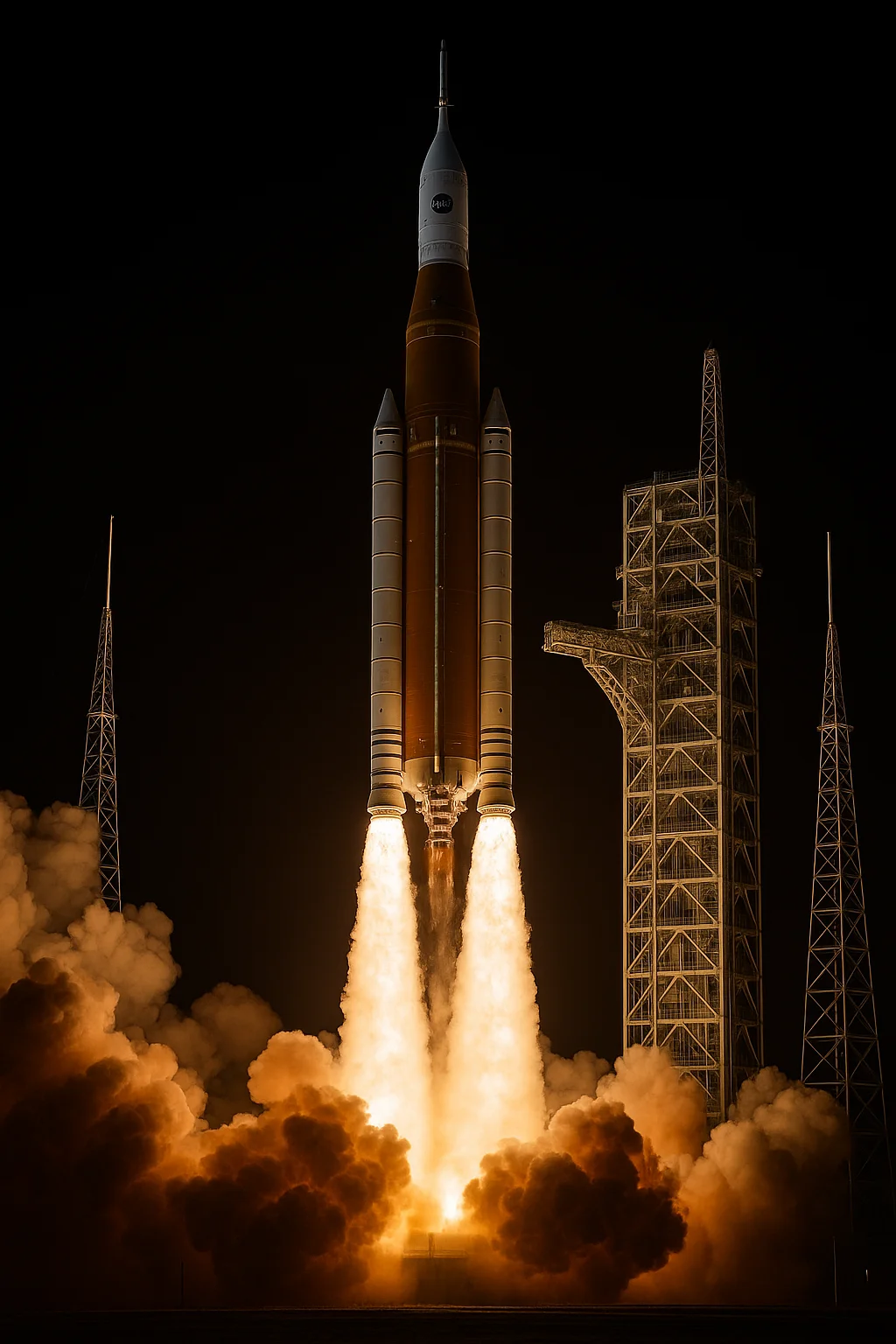
Targets, not promises. Every date here is the target announced by the agency or company responsible, as of our last review. Launch dates in this business slip far more often than they move earlier, especially for first flights. Where a mission's funding or plan is in doubt, we say so.
Late 2026
- BepiColombo enters Mercury orbit (ESA/JAXA) — planned for November 2026, after which the two orbiters separate and begin science operations.
- Voyager 1 reaches one light-day from Earth (NASA) — expected around November 2026, when a radio signal will take a full 24 hours to make the one-way trip.
- Hera arrives at Didymos (ESA) — late 2026, to measure the aftermath of NASA's DART impact on Dimorphos.
- Europa Clipper Earth flyby (NASA) — a gravity assist in late 2026 on the way to Jupiter.
- The 2026 Mars launch window — opens late in the year. JAXA has targeted it for MMX, its Phobos sample-return mission, and SpaceX has talked about sending uncrewed Starships, which should be treated as aspirational.
- Missions targeted for 2026 whose dates we could not confirm at review time — China's Chang'e 7 lunar south-pole mission, Vast's Haven-1 commercial station and Boeing's uncrewed Starliner-1 cargo flight. Check the operator for the latest status.
2027
- Nancy Grace Roman Space Telescope (NASA) — committed to launch by May 2027; NASA has said it could be ready as early as autumn 2026.
- Artemis III (NASA) — under the plan NASA announced in early 2026, a crewed flight in Earth orbit targeted for 2027 to rehearse docking with commercial lunar landers, rather than a landing. See Artemis II for the flight that came before.
- ESCAPADE arrives at Mars (NASA) — twin orbiters launched in November 2025.
- Tianwen-2 sample return (China) — asteroid samples due back to Earth in 2027.
- Lucy reaches the Jupiter Trojans (NASA) — first Trojan flyby, of Eurybates and its moon, in 2027.
- Gaganyaan (ISRO) — India's first crewed orbital flight, which ISRO has said it is aiming for in 2027 after uncrewed tests.
- NEO Surveyor (NASA) — an infrared telescope to find hazardous near-Earth asteroids, targeted for launch no earlier than 2027.
2028
- Artemis IV (NASA) — under the early-2026 plan, the first crewed landing of the programme, targeted for 2028.
- Dragonfly (NASA) — nuclear-powered rotorcraft to Titan, launch planned for July 2028, arriving in 2034.
- Rosalind Franklin rover (ESA) — Europe's Mars drilling rover, planned for 2028 with NASA contributions.
- Tianwen-3 (China) — a Mars sample-return mission China has said it aims to launch around 2028.
- Commercial space stations — Axiom, Starlab and Orbital Reef have all pointed to the late 2020s for their first free-flying stations.
2029 and Later
- 13 April 2029: Apophis flyby — the asteroid passes closer to Earth than geostationary satellites. NASA's OSIRIS-APEX will arrive soon after, and ESA has been preparing a mission called RAMSES to meet it beforehand.
- 2029: Psyche arrives (NASA) — at the metal-rich asteroid 16 Psyche.
- Around 2029: Comet Interceptor (ESA/JAXA) — launches to wait at Sun–Earth L2 for a pristine comet. See Comets and the Kuiper Belt.
- Before 2030: China's crewed lunar landing — the stated goal of China's human spaceflight programme.
- April 2030: Europa Clipper arrives at Jupiter (NASA).
- Around 2030–2031: ISS retirement — NASA plans to operate the station through 2030 and then de-orbit it using a SpaceX-built deorbit vehicle.
- July 2031: JUICE arrives at Jupiter (ESA), entering orbit around Ganymede in 2034.
- 2030s: Venus — ESA's EnVision and NASA's VERITAS and DAVINCI, the latter two subject to NASA budget decisions. See Venus.
- 2034: Dragonfly lands on Titan.
Missions With an Uncertain Future
Some long-planned missions have been put in doubt by cost growth or budget proposals rather than by engineering. NASA's fiscal year 2026 budget request proposed ending Mars Sample Return in its existing form and cancelling or scaling back a number of science missions; Congress did not accept all of those proposals. The lunar Gateway station has also been debated. For these, we do not list a date until a funded plan is confirmed.
Where to Go Next
For what is already flying, see Current Space Missions, Active Deep Space Missions and Current Mars Missions. For people in space, see Crewed Spaceflight Now.
Frequently Asked Questions
What are the next big space missions?
Upcoming highlights include BepiColombo entering Mercury orbit (November 2026), the Nancy Grace Roman Space Telescope (launch by May 2027), the next Artemis flights (2027 and 2028 under NASA's early-2026 plan), Dragonfly to Titan (launch 2028), and arrivals at Apophis and Psyche in 2029.
What are the upcoming missions to the Moon and Mars?
For the Moon: China's Chang'e 7, NASA's Artemis III and IV, and further commercial landers. For Mars: ESCAPADE's arrival in 2027, JAXA's MMX to Phobos, ESA's Rosalind Franklin rover (2028) and China's Tianwen-3 sample return (around 2028).
What missions are going to the outer planets?
Europa Clipper arrives at Jupiter in April 2030 and ESA's JUICE in July 2031. NASA's Dragonfly is planned to launch in 2028 and land on Saturn's moon Titan in 2034.