Four hundred kilometers above Earth, traveling at nearly 28,000 kilometers per hour, space stations represent humanity's most ambitious permanent presence beyond our planet. These orbital laboratories have hosted continuous human occupation for over two decades, advancing science, fostering international cooperation, and preparing us for journeys deeper into space.
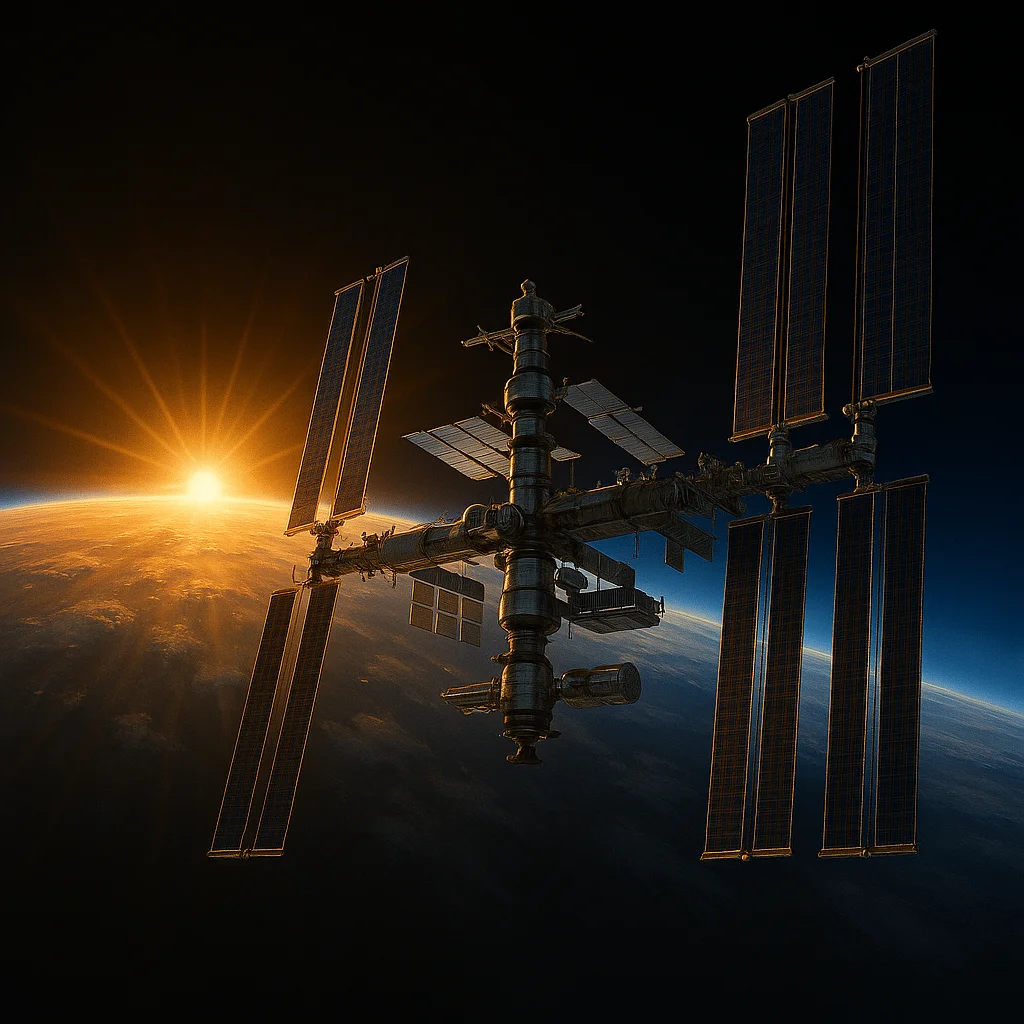
The International Space Station
The crown jewel of human spaceflight, the International Space Station (ISS) has been continuously inhabited since November 2000. This football field-sized laboratory represents one of humanity's greatest engineering achievements and most successful international collaborations.
By the Numbers
- Mass: 420,000 kg (about 460 tons)
- Length: 109 meters (longer than a football field)
- Width: 73 meters (including solar arrays)
- Pressurized Volume: 916 cubic meters (equivalent to a 6-bedroom house)
- Solar Array Surface: 2,500 square meters
- Power Generation: 84-120 kilowatts
- Orbital Period: 90 minutes (16 sunrises/sunsets per day)
- Cost: ~$150 billion (most expensive structure ever built)
Life Aboard the ISS
Living in microgravity presents unique challenges and opportunities:
- Daily Schedule: 6.5 hours of work, 2.5 hours exercise, 8.5 hours sleep
- Exercise: 2.5 hours daily to combat bone and muscle loss
- Food: Mix of freeze-dried, thermostabilized, and fresh supplies
- Water: 93% recycled from urine and humidity
- Internet: 600 Mbps connection for work and personal use
The station is routinely described, by its own operators and by independent commentators, as one of the most successful examples of long-running international cooperation in the history of spaceflight. Its scientific output is secondary to a more fundamental achievement: multiple space agencies, including ones whose governments are otherwise in open political disagreement, have kept crew alive on the same hardware for more than two decades.
Scientific Achievements
The ISS has enabled groundbreaking research impossible on Earth:
- Protein Crystallization: Better drug development through superior crystal growth
- Materials Science: New alloys and manufacturing techniques
- Medical Research: Insights into aging, bone loss, and muscle atrophy
- Earth Observation: Climate monitoring and disaster response
- Technology Demonstration: Testing systems for future deep space missions
China's Tiangong Space Station
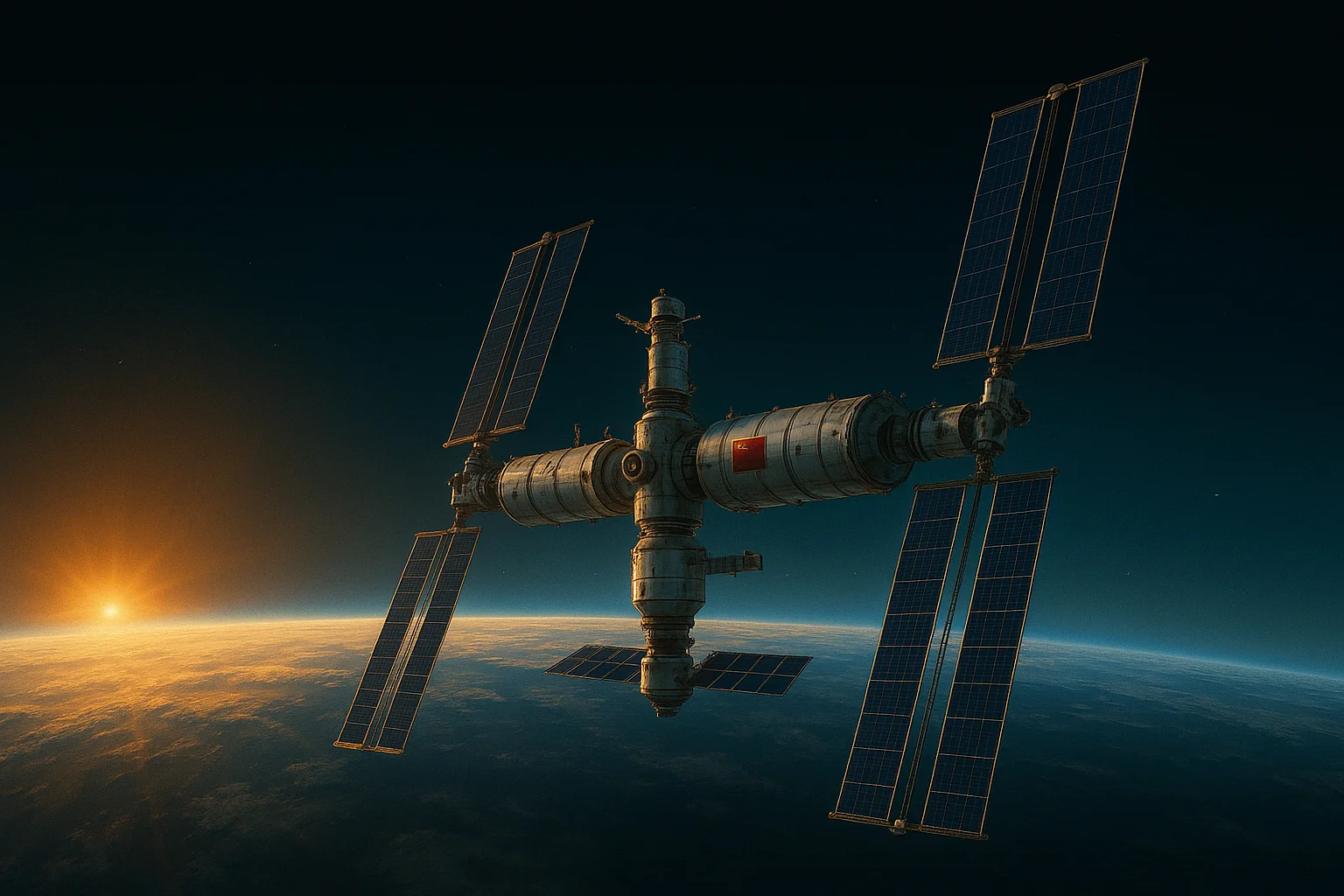
Completed in 2022, the Chinese Space Station (CSS), also known as Tiangong ("Heavenly Palace"), represents China's ambitious entry into permanent space habitation.
Station Specifications
- Mass: ~100,000 kg (about 1/4 the ISS)
- Core Module: Tianhe (launched April 2021)
- Laboratory Modules: Wentian and Mengtian
- Crew Capacity: 3 normally, up to 6 during handovers
- Orbital Altitude: 340-450 km
- Design Life: 10-15 years (extendable)
Unique Features
- Robotic Arm: 10-meter arm can "walk" around the station exterior
- Co-orbiting Telescope: Xuntian space telescope will dock periodically for servicing
- International Cooperation: Open to foreign astronauts and experiments
- Advanced Life Support: Next-generation recycling systems
Commercial Space Stations: The Next Generation
As the ISS approaches retirement (NASA plans to operate it through 2030 and then de-orbit it), private companies are developing the next generation of orbital habitats:
Axiom Station
- Developer: Axiom Space
- First Module: Axiom changed its assembly order in 2024; a Payload Power Thermal Module is now planned to go first, attached to the ISS, later in the decade
- Independence: Planned to separate from the ISS and fly freely before the ISS retires
- Features: Research labs, manufacturing, space tourism
- Crew: Up to 8 people
Orbital Reef
- Developers: Blue Origin, Sierra Space, Boeing
- Launch: Late 2020s
- Volume: 830 cubic meters (90% of ISS)
- Purpose: "Mixed-use business park" in space
- Capacity: Up to 10 people
Starlab
- Developers: Voyager Technologies and Airbus, with other international partners
- Launch: Targeted for the late 2020s
- Design: Single-launch station, sized to go up in one piece on SpaceX's Starship
- Crew: 4 astronauts continuously
Haven-1
- Developer: Vast Space
- Launch: Targeted for 2026 on a Falcon 9 after slipping from 2025; check Vast for the current date
- Purpose: Technology demonstrator and tourist destination
- Follow-up: Haven-2 artificial gravity station planned
Life Support Systems: Keeping Humans Alive
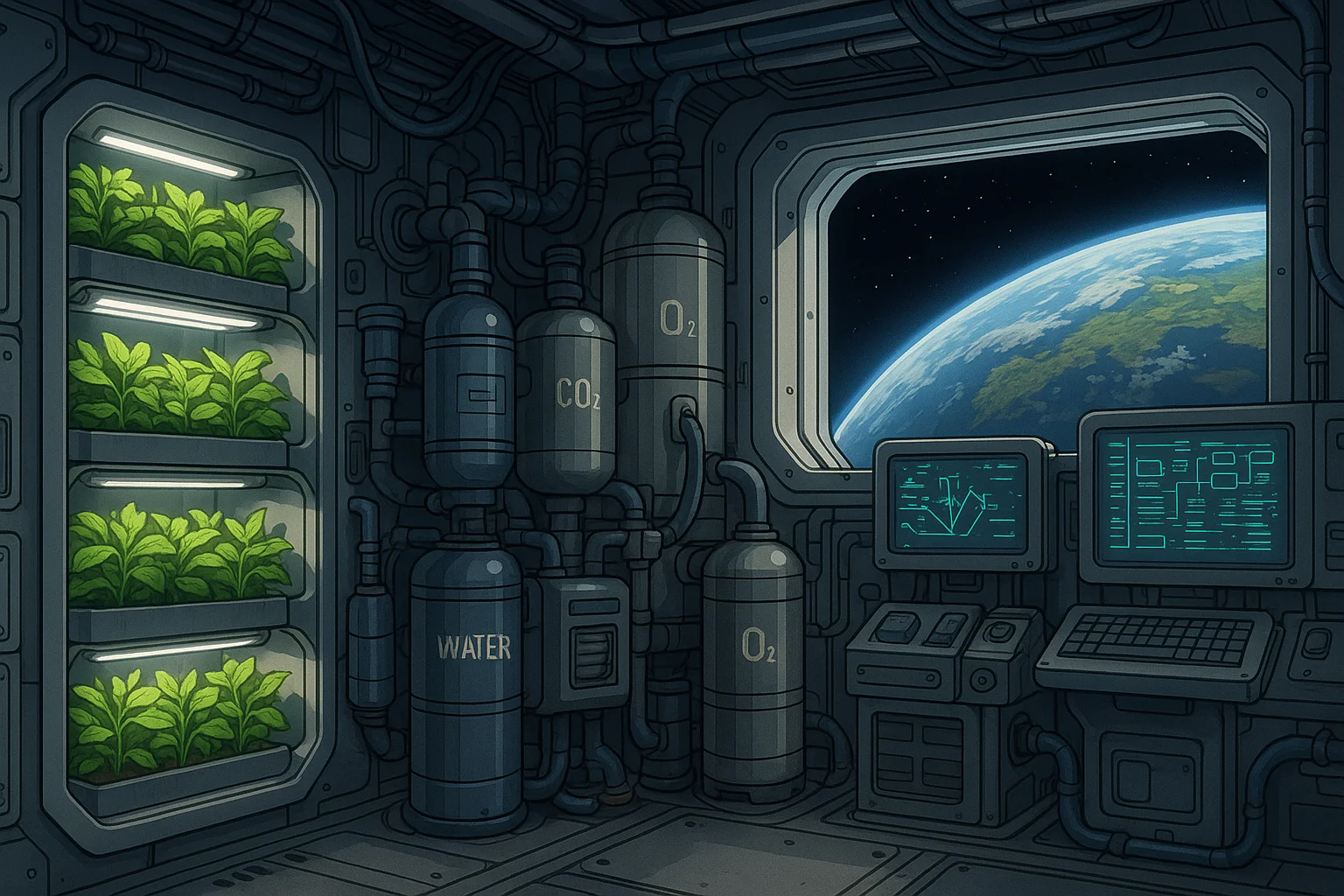
Space stations must recreate Earth's life-supporting environment in the hostile vacuum of space:
Atmosphere Management
- Oxygen Generation: Electrolysis splits water into O2 and H2
- CO2 Removal: Molecular sieves and chemical scrubbers
- Pressure: Maintained at sea level (101.3 kPa)
- Temperature: Controlled between 18-27°C
Water Recycling
The ISS's Environmental Control and Life Support System (ECLSS) achieves remarkable efficiency:
- Processes urine, sweat, and humidity into drinking water
- Recovery rate: 93% (goal: 98% for Mars missions)
- Produces cleaner water than most Earth municipalities
- Saves $88,000 per astronaut per year in launch costs
Waste Management
- Solid Waste: Compressed and stored for disposal
- Liquid Waste: Processed through the water recovery system
- Trash Disposal: Loaded onto cargo ships that burn up on reentry
Research and Manufacturing
Microgravity Science
The absence of gravity enables unique research:
- Combustion Studies: Flames form perfect spheres, revealing new physics
- Fluid Dynamics: Understanding how liquids behave without convection
- Crystal Growth: Larger, more perfect crystals for drug development
- Cell Biology: How cells grow and differentiate without gravity
Manufacturing Opportunities
Commercial stations will enable space-based manufacturing:
- Fiber Optics: ZBLAN fibers 100x better than Earth-made
- Pharmaceuticals: Better protein crystals for drug design
- Advanced Alloys: Impossible to create under gravity
- 3D-Printed Organs: Bioprinting without gravitational deformation
International Cooperation and Politics
Space stations have become symbols of international collaboration:
ISS Partnership
- NASA (USA): Overall management, major modules
- Roscosmos (Russia): Propulsion, life support, crew transport
- ESA (Europe): Columbus laboratory, cargo missions
- JAXA (Japan): Kibo laboratory, cargo resupply
- CSA (Canada): Canadarm2 robotic system
Future Cooperation
Despite geopolitical tensions, space cooperation continues:
- Russia plans its own Russian Orbital Station (ROSS), with first modules targeted for the late 2020s
- India plans the Bharatiya Antariksh Station, with a first module targeted for 2028 and completion around 2035
- Commercial stations open to all paying customers
- The lunar Gateway was planned as the next major international station, though its future has been debated in NASA budget proposals since 2025
Preparing for Deep Space
Space stations serve as testbeds for technologies needed for Mars and beyond:
Closed-Loop Life Support
- Testing 98%+ water recovery for Mars missions
- Developing food production systems
- Perfecting waste processing and recycling
Human Factors
- Understanding psychological effects of isolation
- Developing countermeasures for radiation exposure
- Testing exercise equipment to prevent bone/muscle loss
- Studying team dynamics in confined spaces
Technology Demonstration
- Advanced spacesuits for planetary exploration
- 3D printing for in-space manufacturing
- Robotic systems for external repairs
- Deep space communication systems
The Economics of Space Stations
Current Costs
- ISS Operations: roughly $3 billion or more of NASA's budget each year
- Crew Launch: public estimates range from about $55 million to $90 million per seat, depending on vehicle and year
- Cargo Delivery: tens of thousands of dollars per kilogram delivered to the station, by most public estimates
Revenue Opportunities
- Private astronaut missions: reported prices of tens of millions of dollars per seat
- Manufacturing: Potentially billions in unique products
- Research: Pharmaceutical companies paying for experiments
- Entertainment: Movies, advertising, and media content
The Future of Orbital Habitats
The 2030s will see a transformation in how humanity lives and works in orbit:
Near Term (to 2030, as planned)
- Multiple commercial stations operational
- Regular tourist flights to orbit
- First products manufactured in space for Earth use
- Crew capacity in orbit doubles
Medium Term (2030-2040)
- Rotating stations providing artificial gravity
- Industrial-scale manufacturing facilities
- Orbital hotels and entertainment complexes
- Permanent population exceeding 100 people
Long Term (2040+)
- Large O'Neill cylinder habitats
- Orbital cities with thousands of residents
- Spaceports for deep space missions
- True space-based civilization emerges
Visiting a Space Station
Space tourism is making orbital visits accessible to civilians:
Current Options
- SpaceX Crew Dragon: 3-10 day ISS visits
- Cost: $55 million per seat
- Training: 6 months preparation
- Requirements: Good health, pass medical exams
Future Tourism
- Prices expected to drop to $1-5 million by 2030
- Dedicated tourist modules with viewing cupolas
- Space hotels offering luxury accommodations
- Eventually accessible to middle-class travelers
Conclusion: Our Orbital Future
Space stations represent humanity's first permanent foothold beyond Earth. From the ISS's international partnership to China's independent achievements to the coming wave of commercial stations, these orbital outposts are transforming from government research facilities into bustling centers of commerce, tourism, and eventually, homes.
As we stand on the brink of a new era in space habitation, space stations will serve as the stepping stones to the Moon, Mars, and beyond. They are where we learn to live in space, where we discover new science, where we manufacture the impossible, and where we prepare for humanity's multi-planetary future.
The next time you see a bright dot crossing the night sky—the ISS passing overhead—remember that it carries not just astronauts, but humanity's dreams of a future among the stars. And soon, that single dot will be joined by many others, forming a constellation of human habitats that herald our transformation into a true spacefaring species.